
Tackling Emissions Sources
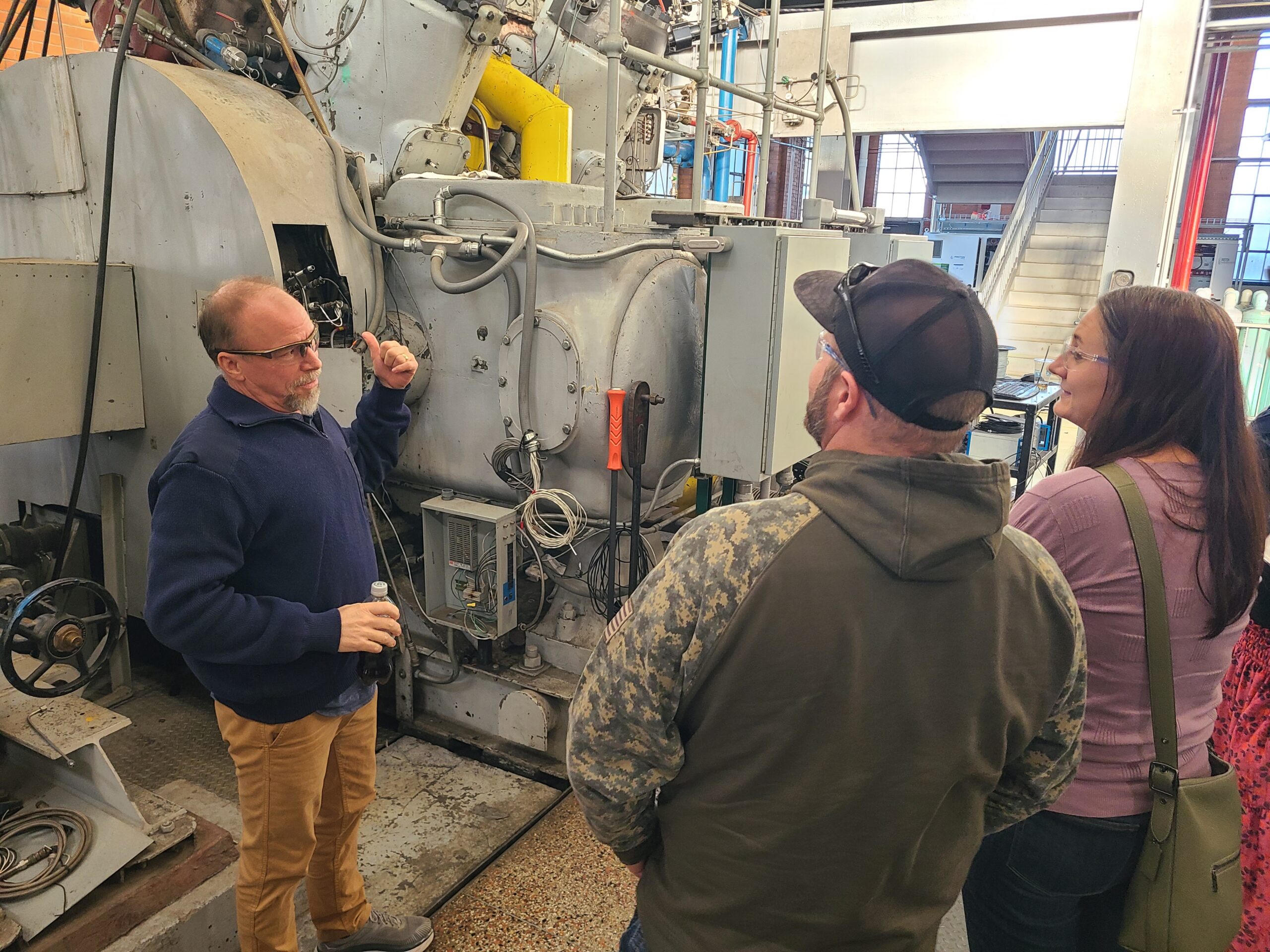
Building on findings from the aerial surveys, the Partnership – in collaboration with Colorado State University (CSU) and Bridger Photonics – organized a field analysis in Fall 2022 with 10 participating companies in the Bakken and Permian basins to validate and better understand the emission sources of methane from compressors and their drivers.
CSU and stack testing companies quantified methane emissions from the exhaust stream, as well as from rod packing vents, crankcase vents and fugitives visible on an OGI camera. The team measured sources on 79 units at 24 sites, and 48 of these units’ emissions were fully captured by the ground team. While the field team was taking measurements on the ground, aerial surveys with an active source LiDAR system were deployed over the field sites to allow for a comparison between aerial survey data and individual source measurements.
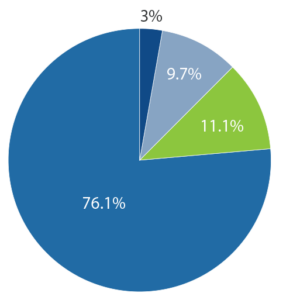
When electric driven units were excluded, over 76% of methane emissions observed during the study were related to engine exhaust
 |
Fugitives |
 |
Rod Pack Vents |
 |
Engine Crankcase Vents |
|
Engine Exhaust |
Additionally, CSU found that the majority of units were operating within design specifications and that in most cases engine emissions did not significantly exceed manufacturer estimates. The average magnitude of emissions for units where the field team was able to completely quantify emissions aligned with average aerial survey totals over the same time period.
These results indicate that the majority of emissions observed from compressor-driver units is related to methane slip through engine exhaust. Companies and The Partnership are working with operators, engine manufacturers and other stakeholders to identify solutions that can further mitigate methane emissions from compressor drivers.