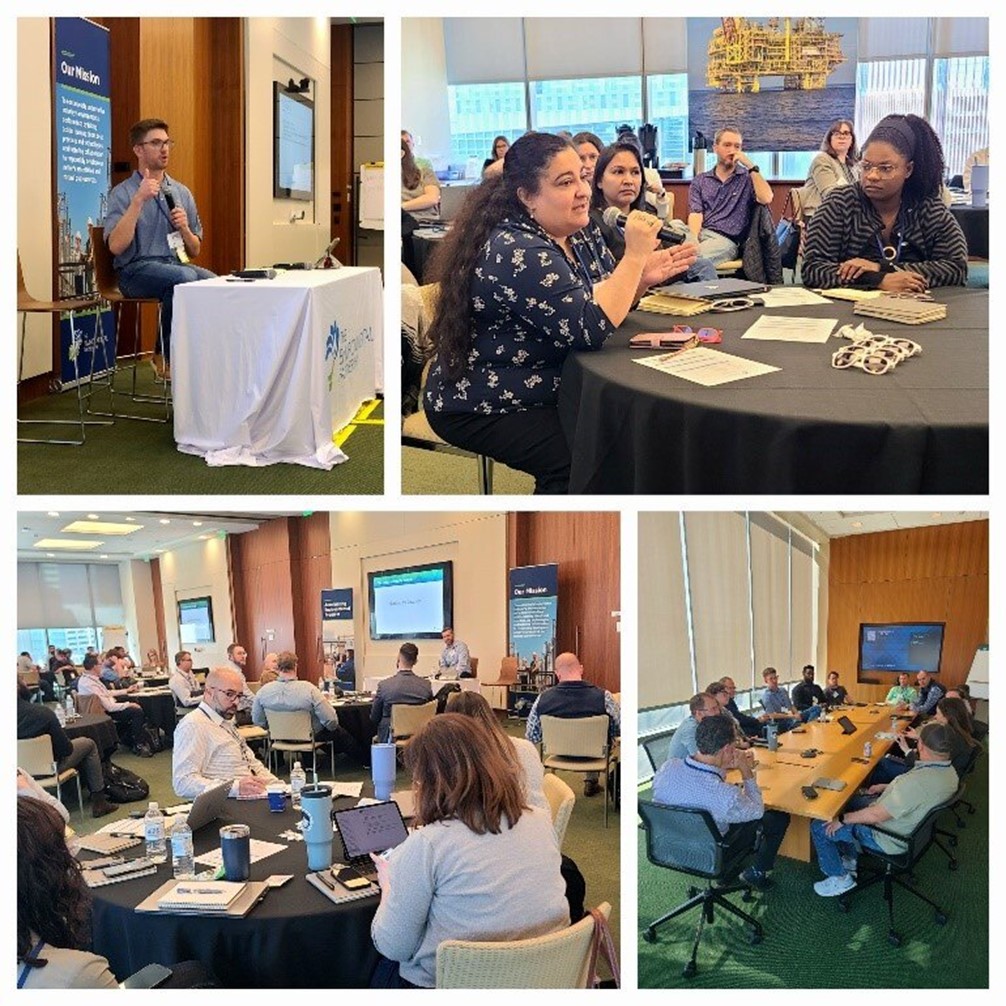
In February, The Environmental Partnership held a workshop focused on flaring at Hess Tower in Houston, Texas. TEP conducted a flare study in 2024 to better understand flare efficiency best practices. Over 80 TEP operators met to review the study results and share best practices to reduce emissions from flare operations. Discussion topics included flare design considerations, fan speed programming, flare monitoring strategies and data management, and real-time process control solutions to mitigate the need to flare.
The 2024 flare study involved four weeks of destruction and removal efficiency (DRE) testing in three basins (Eagle Ford, Permian, and Bakken) coordinating with 11 operator partners and evaluating over 180 flares from 13 manufacturers. Study results showed that 89% of flares selected for testing had DRE above 98%, and 99% of flares selected for testing had DRE above 95% and also showed minimal difference between flare types and average DRE.
Inefficient combustion and unlit flares are drivers of high emission events observed by third parties. TEP operators are applying best practices to address these drivers, mitigate the need to flare and monitor for flare malfunctions. Solutions include facility design strategies, implementing digital operating systems to adjust production when an upset condition is detected, and daily inspections of flares to ensure flare pilots are lit and thermocouples are operating properly.
Presentations from the TEP 2025 Flare Workshop are available for members in TEP’s Resources Section of the website.